
The Headmaster
Play The Headmaster
The Headmaster Screenshots









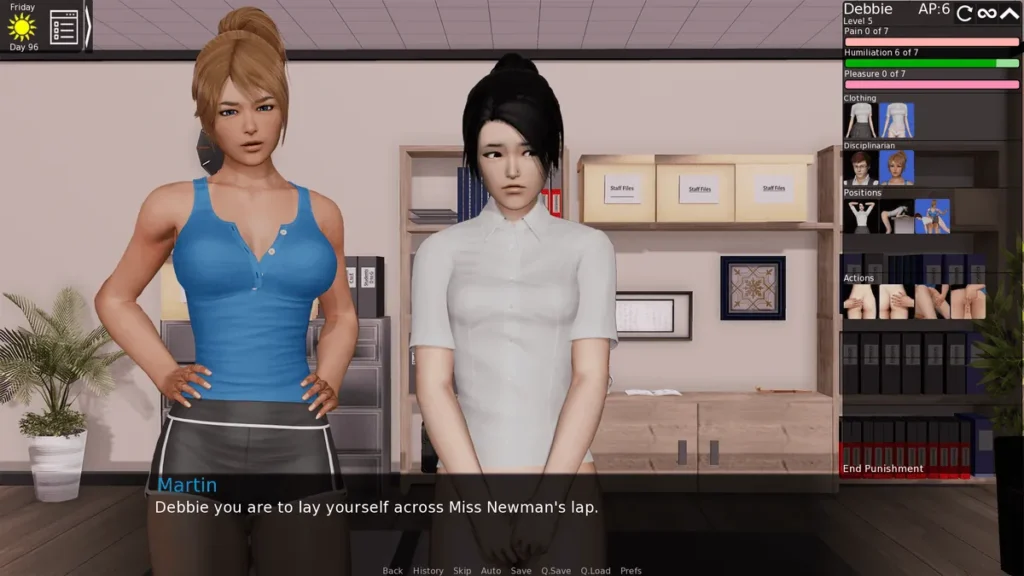
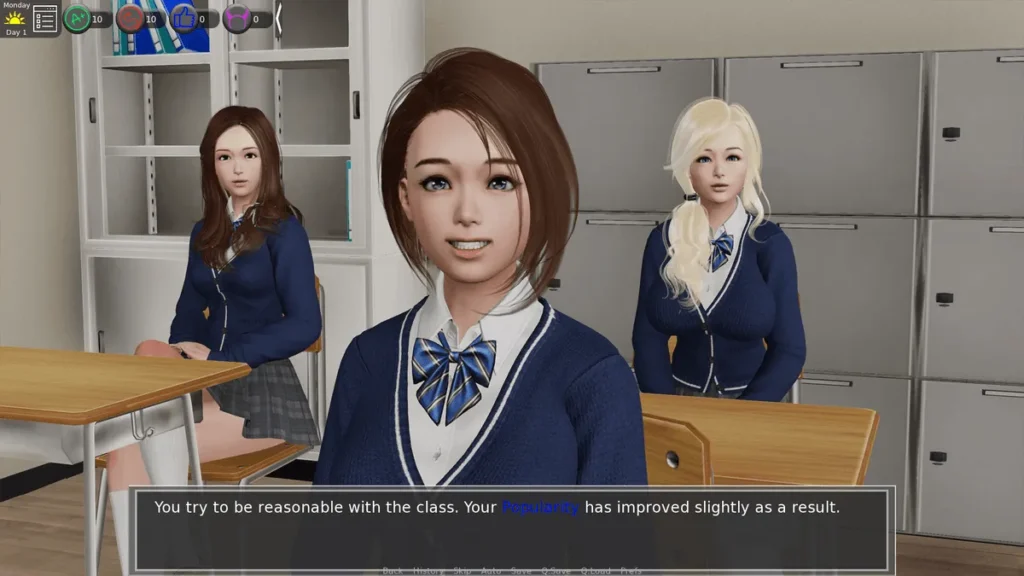
The Headmaster review
An in-depth, player-focused walkthrough and analysis of The Headmaster
This article is a player-centered guide to The Headmaster, designed to help both newcomers and returning players navigate its branching quests, school management systems, and character interactions. In the first paragraph I spell out the main keyword so readers know this piece covers The Headmaster thoroughly. I’ll share hands-on tips I learned from playthroughs, highlight pivotal choices and common pitfalls, and provide actionable strategies to reach favored endings while preserving immersion.
Core Mechanics and Systems in The Headmaster
Welcome, Headmaster! 👋 Before you can shape young minds and run your academy, you need to understand the machinery that makes it tick. Think of your school as a living, breathing organism with five vital signs: Discipline, Grades, Popularity, Money, and Influence Points. Your entire reign—whether it ends in glorious triumph or humiliating failure—hinges on how you manage these interconnected systems. Each day presents a delicate balancing act; a harsh punishment might boost Discipline but crater your Popularity, while focusing solely on lessons could see order collapse. Let’s dive into these core mechanics and transform you from a overwhelmed novice into a master of resource management. 🏛️
How Discipline, Grades and Popularity Interact
This trio is the holy trinity of your daily struggle. They aren’t isolated numbers on a screen; they’re in a constant, push-pull relationship that defines your school’s atmosphere and your students’ progress.
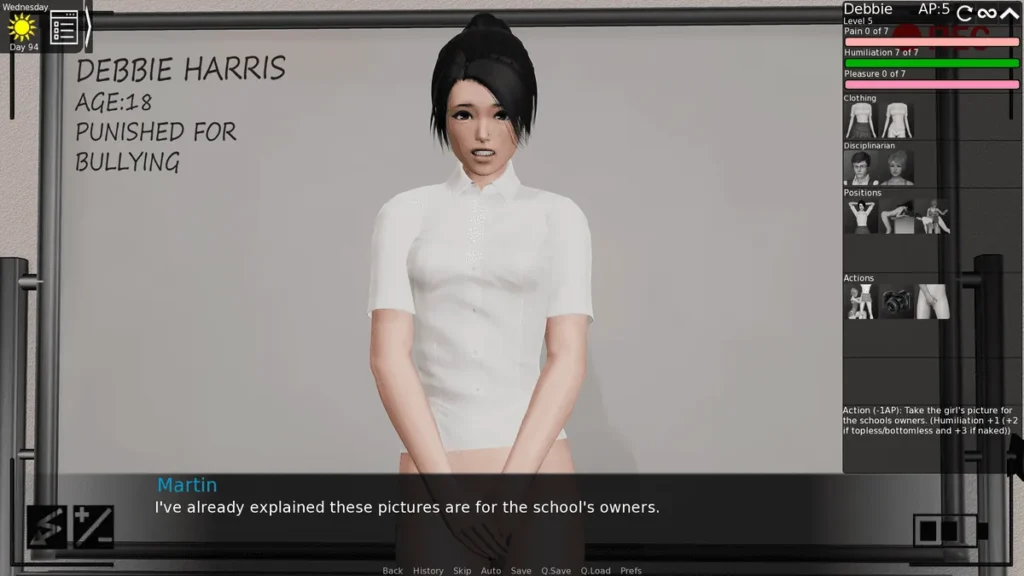
The Discipline system is your foundation. It represents the overall order and fear in the halls. You raise it primarily through punishing students in your office after lessons. This isn’t just for show—it directly fuels academic success. Think of Discipline as the soil in which Grades progression grows. The higher your school-wide Discipline, the faster your students’ grade percentages increase naturally over time. There are key thresholds you need to know:
- Low (Below 30%): Chaos reigns. Grade growth is painfully slow, and negative random events are frequent.
- Moderate (30-69%): The standard operating zone. Grade progression is steady and predictable.
- High (70%+): This is the sweet spot. Academic efficiency is maximized, and grade growth accelerates significantly. Maintaining this level is often a key to late-game success.
- Very High (90%+): While excellent for grades, tread carefully. This extreme can strain other systems, like Popularity management.
Grades progression is your primary measure of success. Each student and class has a percentage that ticks upward based on Discipline, the quality of lessons you teach, and facility upgrades. Your ultimate goal is to get key characters past specific grade milestones to unlock story scenes and pass critical exams. But grades don’t exist in a vacuum. If you focus purely on teaching and ignore discipline, your progress will stall. Conversely, if you become a tyrant focused only on punishment, you’ll encounter our third pillar: Popularity.
Popularity management is the social currency of the school. It reflects how students and, to a lesser extent, staff view you. Harsh punishments, especially for favored students, will lower it. Letting misbehavior slide or choosing friendly dialogue options can raise it. Why care? 😊 If Popularity drops too low (consistently below 20-30%), you risk triggering a bad ending where your authority completely erodes, and the school revolts. It acts as a check on your power, forcing you to be strategic rather than purely authoritarian.
Pro Tip: Don’t chase maximum stats in all three at once. A sustainable strategy is to push Discipline high to enable fast Grades progression, while carefully managing Popularity to keep it just above the danger zone. Use periods of high popularity to enact stricter rules or deliver necessary, harsh punishments.
Staff, Students and Influence: Managing Relationships
Your school isn’t just a collection of stats; it’s filled with people. Managing your relationships with them through influence points is arguably the deepest layer of strategy in The Headmaster.
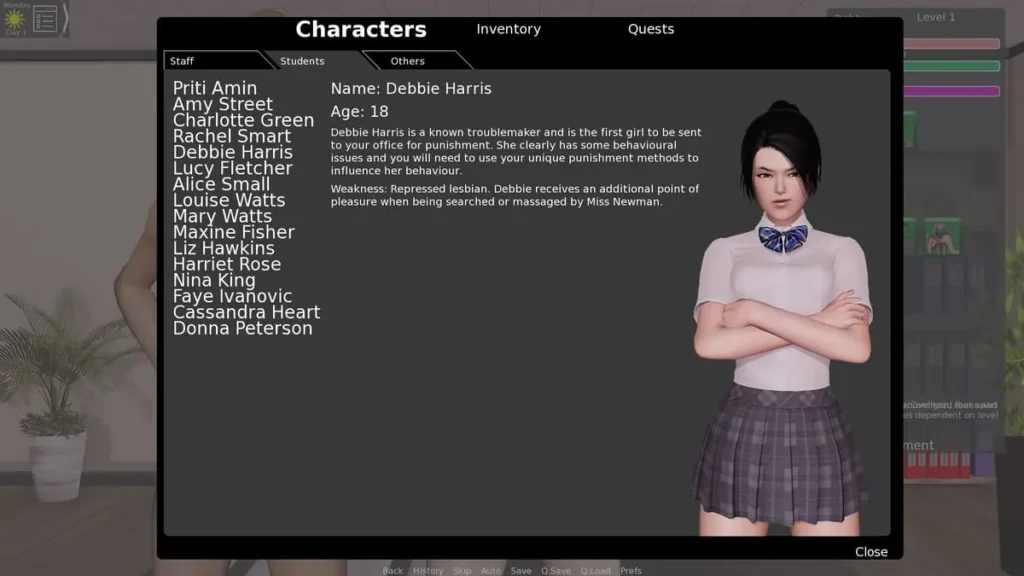
Influence Points are earned by interacting with characters—through conversations, fulfilling their requests, or choosing specific dialogue options during story events. These points are per character. Spending them allows you to unlock new dialogue, learn backstory, and, most importantly, access special actions or favors. For staff, this might mean they offer more effective teaching assistance or turn a blind eye to certain activities. For students, it can unlock unique interactions or make them more responsive to your methods.
This is where resource management gets personal. You have limited time and influence points to spend each day. You must decide: Do I build rapport with the shy student struggling in class to boost her grade growth? Or do I cozy up to a teacher to improve my lesson efficiency? Your choices here directly shape which storylines you unlock and what tools you have at your disposal.
School rules are your legislative power, and they are deeply tied to influence. Passing a new rule (like “Strict Uniform Checks” or “Mandatory Study Hours”) requires a vote from your staff. Their willingness to vote yes is heavily influenced by your relationship with them. A teacher you’ve ignored will likely vote no; one you’ve built influence with may support you. Once passed, rules permanently alter the game’s landscape, changing the baseline gains for Discipline, Popularity, or Grades. A well-chosen rule can solve a persistent problem, like automatically boosting discipline gains from punishments, freeing up your daily actions for other tasks.
Here’s a quick guide to how your common daily actions affect your core resources:
| Action | Discipline | Grades | Popularity | Money | Influence |
|---|---|---|---|---|---|
| Administer a Punishment | 🔼 Major Increase | ➡️ Indirect Boost (via high Discipline) | 🔽 Decrease | ➡️ No Effect | ➡️ No Direct Effect* |
| Teach a Lesson | ➡️ Small Loss (if no follow-up punishment) | 🔼 Direct Increase | 🔼 Small Increase | ➡️ No Effect | ➡️ Possible with certain students |
| Pass a School Rule | Varies (e.g., 🔼 if rule is strict) | Varies (e.g., 🔼 if study-focused) | Varies (e.g., 🔽 if rule is harsh) | 🔽 Cost to enact | 🔽 Spent to secure votes |
| Visit a Character (Chat) | ➡️ No Effect | ➡️ No Effect | 🔼 Possible Increase | ➡️ No Effect | 🔼 Primary Gain |
| Purchase Facility Upgrade | ➡️ No Direct Effect | 🔼 Passive Boost (e.g., Library) | 🔼 Possible Increase (e.g., Lounge) | 🔽 Major Cost | ➡️ No Effect |
While not direct, punishing a student can affect your influence with them* negatively, while possibly raising it with a staff member who advocated for it.
Daily Routine and Time Management Strategies
Days in The Headmaster are short, and your action points are precious. A wasted day can set back your grades progression or let discipline slip. Here’s a breakdown of a powerful, sustainable daily routine, along with a hard-learned lesson from my own failures.
A Sample Power-Gaming Day Schedule:
1. Morning: Check the status screen. Who has low grades? Who is causing discipline problems? Plan your lesson target. Teach your selected lesson—prioritize students who are both behind and crucial to story progression. 📚
2. Mid-Day: This is punishment time. Immediately after the lesson, summon the relevant student(s) to your office. This counters the small discipline drop from teaching and capitalizes on the “event.” Then, use your remaining action point to either:
* Build Influence: Chat with a staff member you need support from for an upcoming school rule vote.
* Manage Popularity: If your harsh punishment tanked your rating, chat with a friendly student to gently nudge it back up.
3. Evening: If you have a third action (some days/upgrades grant this), this is for strategic projects. Work on passing a school rule, saving money for an upgrade, or delving into a character’s storyline.
A Personal Tale of Mismanagement: In my first serious playthrough, I became obsessed with grades progression. I taught lessons constantly, barely punished anyone, and used all my influence to be everyone’s friend. My Popularity management was fantastic! 😎 But I completely ignored the discipline system. It languished around 25%. For weeks, things seemed fine… until they weren’t. My grade growth slowed to a crawl. Random events of misbehavior consumed my action points. My high popularity began to plummet as the school saw me as a weak leader. I was stuck in a death spiral. I barely scraped by the mid-term exam and ultimately faced an ending where the board fired me for a complete lack of control.
The correction was simple but profound. In my next playthrough, I made Discipline my early-game priority. I punished ruthlessly for the first week, accepting a low popularity as a temporary cost. Once Discipline was secured above 70%, the grade growth was so rapid I could afford to spend actions repairing my popularity and building influence. The difference was night and day.
Tactical Recommendations: A Phased Approach
Early-Game (Week 1-2): Foundation of Fear
* Priority #1: Build Discipline to at least 70%. Don’t shy from punishments.
* Priority #2: Earn just enough Money through story events to cover essentials.
* Avoid: Major influence point spending or costly school rules. Let popularity stay low-medium. Your goal is to unlock efficient punishment tools and establish order.
Mid-Game (Week 3-5): Expansion and Balance
* Priority #1: Pass key school rules that automate your gains (e.g., a rule that increases daily Discipline). Use your saved influence to secure staff votes.
* Priority #2: Invest in facility upgrades. The Library is a game-changer for passive grades progression.
* Priority #3: Begin serious Popularity management and targeted influence building with characters whose storylines you want to pursue. Your high discipline now gives you the breathing room to do this.
Late-Game (Week 6+): Perfection and Endings
* Checklist:
* Ensure Discipline is stable at 80%+ for maximum academic efficiency.
* Have Popularity at a safe, stable level (40%+).
* Money should be stockpiled for any final, expensive upgrades or rule changes.
* Influence Points should be spent to unlock final character scenes and ensure key students have their grades pushed over critical thresholds (often 90%+ for main characters).
* Pass any final school rules that optimize your stats for the home stretch.
* Your daily routine now focuses on micromanaging the grades of specific students for their final exams and witnessing the conclusion of the stories you’ve cultivated.
Mastering these core systems is what separates a struggling administrator from a legendary Headmaster. It’s a dance of pressure and reward, of fear and favor. Now that you understand the clockwork, you’re ready to step into your office and not just run the school, but truly rule it. Good luck. The students are waiting. 🫡
This guide organized a practical path through The Headmaster by explaining core mechanics, detailing quest triggers and character routes, offering optimization strategies, and addressing mods and narrative approaches. Use the chapter checklists and build comparisons to plan your preferred playstyle; if a run goes off track, follow the stat recovery tactics and prioritization tips to regain control. Try the suggested day-by-day checklist in the walkthrough chapter on your next playthrough and share which endings you achieve so the community can compare strategies.